The Way Forward: Psychological Skills Training
In my work as a therapist, I combine conversation-based therapy with structured psychological skills training. Many clients find that learning practical tools between sessions helps therapy progress more effectively and leads to lasting change. To support this process, I have developed a series of short learning modules that introduce important psychological concepts and provide exercises for applying them in everyday life.
Each module focuses on a specific skill—such as recognizing patterns of thinking, strengthening more flexible beliefs, improving emotional tolerance, or responding more effectively to difficult situations.
How the Module System Works
During therapy, clients are occasionally given short modules that expand on ideas we discuss in session. These modules are designed to be brief, practical, and easy to apply. Rather than lengthy reading, the goal is to provide clear explanations and focused exercises that help clients practice new ways of thinking and responding to challenges. Over time, these modules form a practical toolkit for managing stress, improving emotional resilience, and making thoughtful decisions in difficult situations.
What Clients Receive
Clients who work with me in therapy may receive:
• Short learning modules that explain key psychological skills
• Worksheets that help apply these ideas to real situations
• Exercises designed to strengthen new habits of thinking and behavior
These materials are meant to support the work we do together in therapy and help clients practice skills between sessions.
Additional Resources
Below are some additional readings and worksheets related to the skills covered in therapy.
These materials are only a small portion of the full module system but may still be helpful for people interested in learning more about these ideas.
Invisible Toolbox Materials
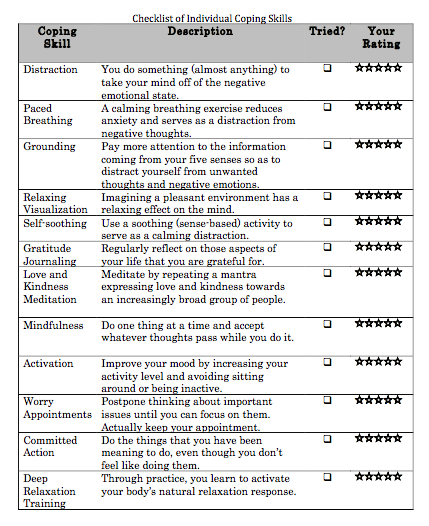
These printouts are meant to accompany my free eBook: The Invisible Toolbox: Coping Skills for Everyday Resilience
Invisible Toolbox: Coping Skills Checklist
Invisible Toolbox: Coping Plan

CBT Materials
The worksheets below include several of the CBT tools I most frequently use in therapy. They are provided here for educational purposes and may also be helpful for individuals who are working with a CBT therapist.
Introduction to CBT Workbook
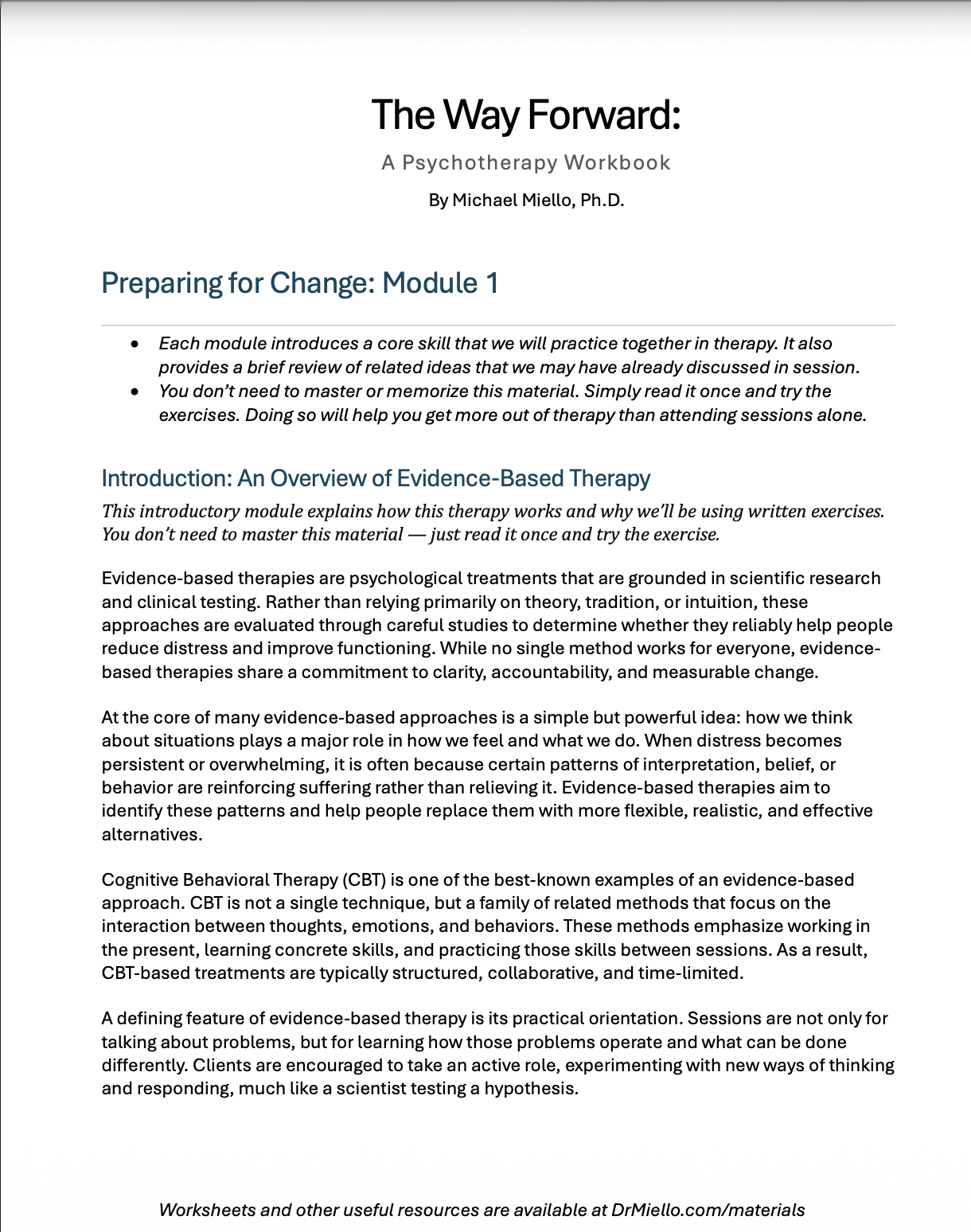
This short workbook provides an overview of Cognitive Behavioral Therapy (CBT) and introduces a simple method for describing and understanding emotional experiences.
Emotions Table
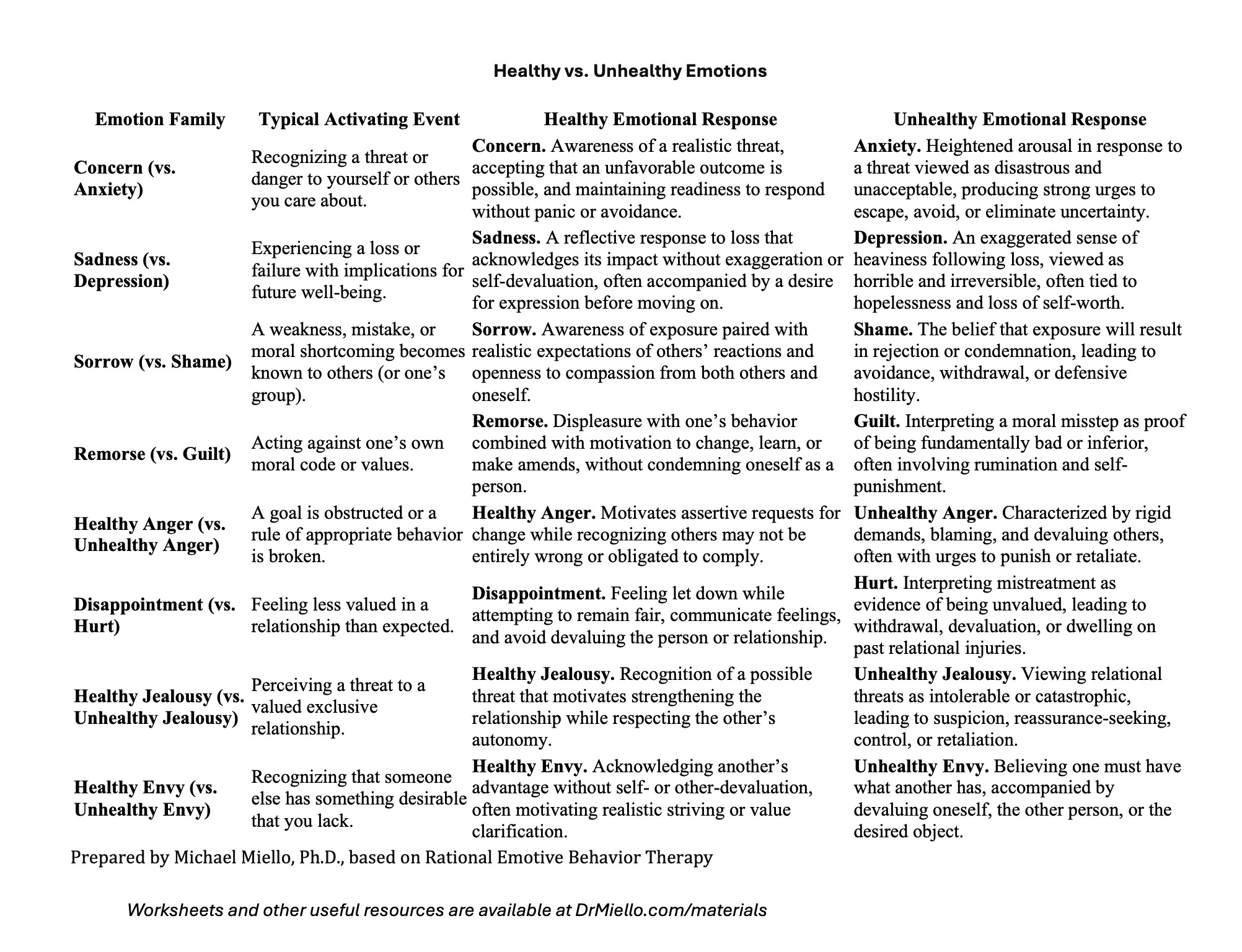
This key REBT handout differentiates between healthy and unhealthy emotions.
The Three Box Sheet

The Three box sheet provides practice identifying Automatic Thoughts and writing a more helpful Alternative Thought.
Unhelpful Thinking Styles

This is my take on the most important Unhelpful Thinking Styles presented on one summary page.
The Seven Shovels (full)
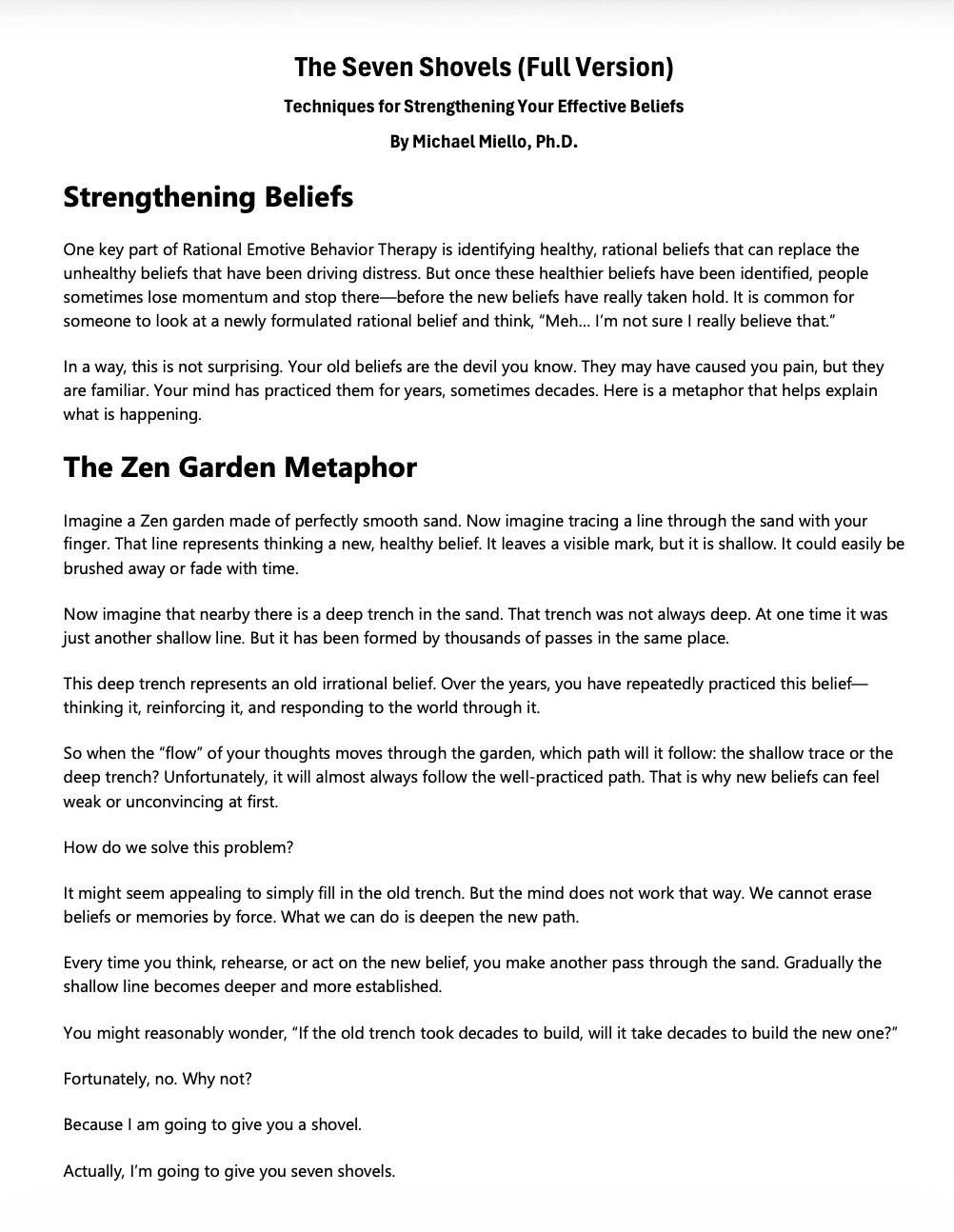
The full version of The Seven Shovels: Methods for strengthening healthy beliefs.
Beliefs and Rules Sheet
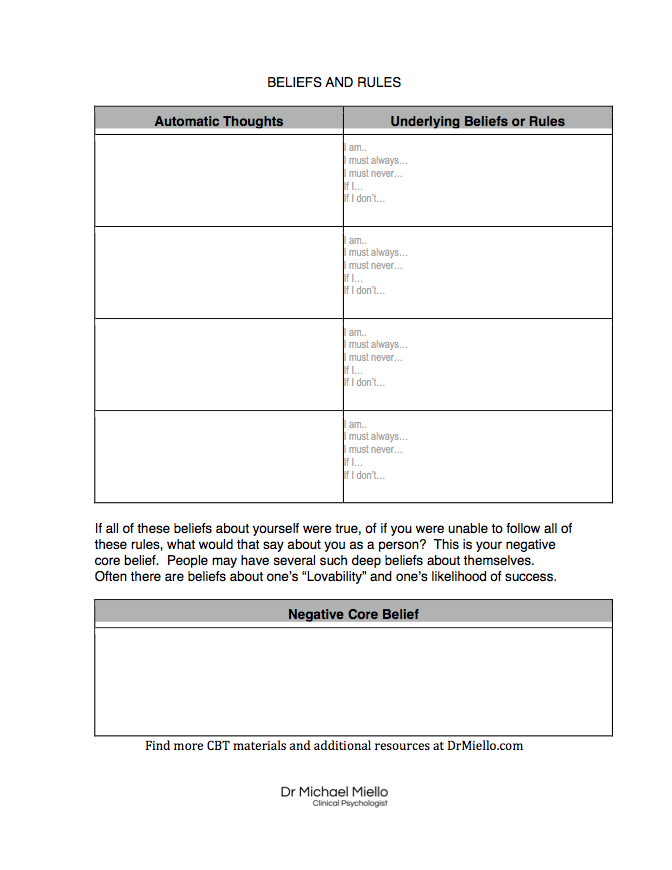
The Beliefs and Rules Sheet assists in identifying the beliefs that underly your Automatic Thoughts. From these you may be able to identify the Negative Core Belief.
Core Beliefs Worksheet
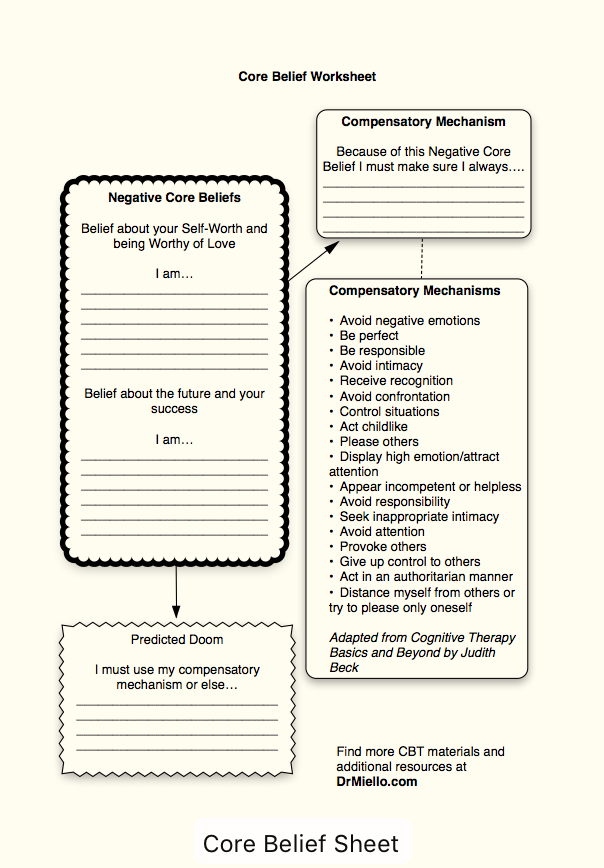
The Core Beliefs sheet allows you to explore your core belief and what methods you may be using to compensate for it.
If you are interested in working together, therapy sessions integrate these ideas with personalized guidance and discussion. Ready to get started? Make an appointment today.